March 27, 2016
Rex Sempiterne Cælitum / O Thou, the Heavens' Eternal King
EASTERTIDE - Rex Sempiterne Cælitum is an anonymous Ambrosian hymn dating back to the 6th century. Originally titled: Rex coterie Domine, the text has gone through a number of significant changes over the centuries including those made for a Benedictine Breviary and by Pope Urban VIII. St. Bede (672?-735) sings it's praises in De Arte Metrica as "that admirable hymn... fashioned exquisitely after the model of iambic metre". In the Roman Breviary it is traditionally sung at Matins during the Paschal season. The translation given below: O Thou, the Heavens' Eternal King is Hymn 61 in Fr. Britts' Hymns of the Breviary and Missal. It is "a cento" (from the Latin word for patchwork) meaning: "a poetic form made up of lines various from poems", or in this case other verses from translations of the hymn. It can be sung to the hymn tune: St. Botolph, as featured in the videos below.
REX SEMPITERNE COELITUM
1. Rex sempiterne coelitum,
Rerum Creator omnium,
Aequalis ante secular
Semper Parenti Filius.
2. Nascente qui mundo Faber
Imaginem vultus tui
Tradens Adamo, nobilem
Limo jugasti spirit.
3. Cum livor et fraus daemonis
Foedasset humanum genus:
Tu carne amictus, perditam
Formam reformas Artifex.
4. Qui natus olim e Virgine,
Nunc e sepulcro nasceris
Tecumque nos a mortuis
Jubes sepultos surgiere.
5. Qui pastor aeternus gregem
Aqua lavas Baptismatis:
Haec est lavacrum mentium;
Haec est sepulcrum criminum.
6. Nobis diu qui debitae
Redemptor affixus Cruci,
Nostrae dedisti prodigus
Pretium salutis sanguines.
7. Ut sis perenne mentibus
Paschale, Jesu, gaudium,
A morte dira criminum
Vitae renatos libera.
8. Deo Patri sit gloria,
Et Filio, qui a mortuis
Surrexit, ac Paraclito,
In sempiterna secular.
Click here for music/text which Fr. Vogel sings. (opens in new window)
O THOU, THE HEAVENS' ETERNAL KING (from "Hymns of the Breviary and Missal")
1. O Thou, the heavens' eternal King,
Creator, unto Thee we sing,
With God the Father ever One,
Co-equal, co-eternal Son.
2. Thy hand, when first the world began,
Made in Thine own pure image man,
And linked to Adam, sprung from earth,
A living soul of heavenly birth.
3. And when by craft the envious foe
Had marred Thy noblest work below,
Clothed in our flesh, Thou didst restore
The image Thou hadst made before-
4. Once wast Thou born of Mary's womb;
And now, new-born from out the tomb,
0 Christ, Thou bidd'st us rise with
Thee From death to immortality.
5. Eternal Shepherd, Thou dost lave
Thy flock in pure baptismal wave—
That mystic bath, that grave of sin,
Where ransomed souls new life begin.
6. Redeemer, Thou for us didst deign
To hang upon the Cross of pain,
And give for us the lavish price
Of Thine own Blood in sacrifice.
7. Grant, Lord, in Thee each faithful mind
Unceasing Paschal joy may find;
And from the death of sin set free
Souls newly born to life by Thee.
8. To Thee, once dead, who now dost live,
All glory, Lord, Thy people give,
Whom, with the Father, we adore,
And Holy Ghost forevermore.
January 9, 2016
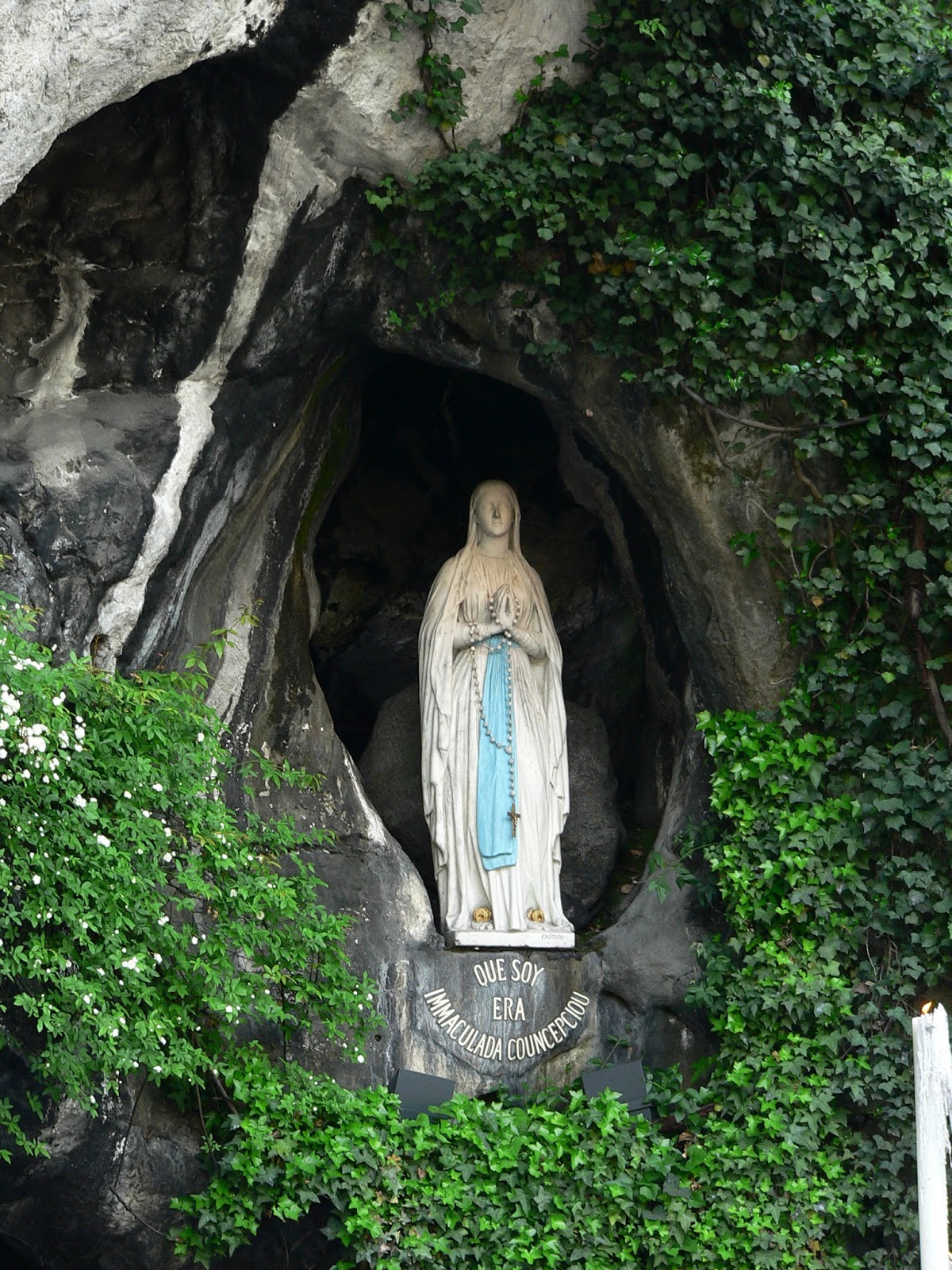
Te Sicimus Praeconio (O Virgin Mother of Our God)
| Grotto at Lourdes, France - Courtesy of Wikipedia |
PROPER OF SAINTS - Te Dicimus Praeconio is sung at Matins on the Feast of Our Lady of Lourdes, February 11. Although the author of the original Latin hymn is unknown, some have suggested that Leo XIII (who contributed to the Office of Our Lady of Lourdes) may have written the text. The English translation is by Archbishop Edward Bagshawe (1829-1915). The other Latin hymns traditionally sung with the Office for Our Lady of Lourdes are: Ave Maris Stella (Vespers I), Aurora Soli Previa (Lauds), and Omnis Experts Maculae Mariam (Vespers II). O Virgin Mother of Our God can be sung to any hymn tune with 8.8.8.8 metre such as the 7th century Latin hymn: Creator Alme Siderum, as featured in the following video.
TE DICIMUS PRAECONIO
1. Te dicimus praeconio,
Intacta Mater Numinis,
Nostris benigna laudibus
Tuam repende gratiam.
2. Sontes Adami posted
Infecta proles gignimur;
Labis paternae nescia
Tu sola, Virgo, crederis.
3. Caput draconis invidi
Tu conteris vestigio,
Et sola gloriam refers
Intaminatae origins.
4. O gentis humanae decus
Quae tollis Hevae opprobrium,
Tu nos tuere supplices,
Tu nos labantes erige.
5. Serpentis antique potes
Astus retunde et impetus,
Ut coelitum perennibus
Per te fruamur gaudes.
6. Jesu, tibi sit gloria
Qui natus es de Virgine,
Cum Patre, et almo Spiriti
In sempiterna saecula.
O VIRGIN MOTHER OF GOD
1. O Virgin Mother of our God,
While we thy matchles? glories chant,
Do thou, in answer to our praise,
To us abundant graces grant.
2. We Adam's guilty children are,
A sin-infected progeny,
Thou art, 0 Virgin, we believe,
Alone from his infection free.
3. The envious dragon's cruel head
Thou with thy heel dost trample down,
And of a stainless origin
Thou only dost the glory own.
4. O Flower of the human race,
Who takest Eve's reproach away,
Protect us when we cry to thee,
Our tottering footsteps deign to stay.
5. From the old serpent's wiles and force,
Thy clients mightily defend,
That, through thy mercy, they may win
Those heavenly joys which never end.
6. Jesus, to Thee be glory given,
Whom erst the Virgin-Mother bore,
With Father and with Holy Ghost,
Through endless ages evermore.
October 4, 2015
God's Messenger, Theresa / Regis Superni Nuotai
![]() |
| Painting by Peter Paul Rubens (1577-1640) - Courtesy of Wikipedia |
PROPER OF SAINTS - God's Messenger, Theresa is a translation by poet Daniel Joseph Donahoe (1853-1930) of Regis Superni Nuntia by Pope Urban VIII (1568-1644). In the Roman Breviary Regis Superni Nuntia is traditionally sung at Vespers and Matins on October 15th, the Memorial of the Spanish Mystic and reformer of the Carmelite Order, St. Teresa of Ávila (1515-1582). God's Messenger, Theresa can be sung to the hymn tune: Christus Der Ist Mein Leben, as featured in the following video.
Tune: Christus Der Ist Mein Leben (with introduction) - Begins at 00:45
GOD'S MESSENGER, THERESA by D. J. Donahue
1. God's messenger, Theresa,
Thou leav'st Thy father's home
To bring mankind to Jesus,
Or gain sweet Martyrdom.
2. But milder death awaits thee,
And fonder pains are thine,
God's blessed angel wounds thee
With fire of love divine.
3. Sweet virgin, love's pure victim,
So fire our souls with love,
And lead thy trusting people
Safe to the realms above.
4. Give glory to the Father,
The Spirit and the Son,
One Trinity, one Godhead,
While endless ages run.
Contemporary Version by the Carmelite youth choir: Twoje Niebo
REGIS SUPERNI NUNTIA by Pope Urban VIII
1. Regis superni nuotai
domum paternam deserts,
terris, Teresa, barbaris
Christum datura aut sanguine.
2. Sed te manet suavior
mors, pœna poscit dulcior:
divini amoris cuspide
in vulnus icta concedes.
3. O caritátis víctima,
tu corda nostra concreta,
tibique gentes creditas
inferni ab igne libera.
4. Sit laus Patri cum Filio
Et Spiritu Paraclito,
Tibique sancta Trinitas,
Nunc, et per orne saeculum.
Subscribe to:
Posts (Atom)