Showing posts with label Blessed Virgin Mary. Show all posts

January 9, 2016

Te Sicimus Praeconio (O Virgin Mother of Our God)

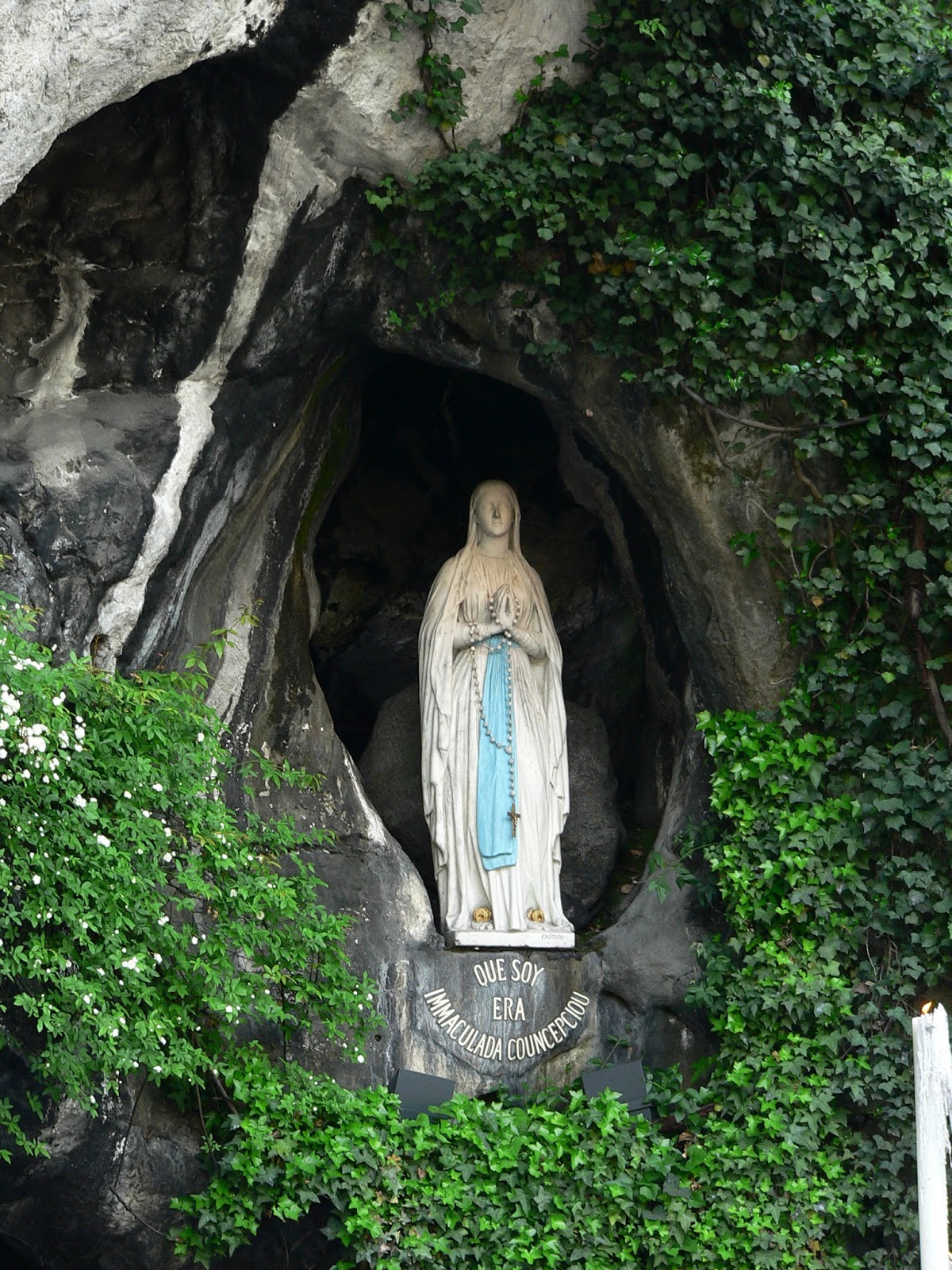
Grotto at Lourdes, France - Courtesy of Wikipedia

PROPER OF SAINTS - Te Dicimus Praeconio is sung at Matins on the Feast of Our Lady of Lourdes, February 11. Although the author of the original Latin hymn is unknown, some have suggested that Leo XIII (who contributed to the Office of Our Lady of Lourdes) may have written the text. The English translation is by Archbishop Edward Bagshawe (1829-1915). The other Latin hymns traditionally sung with the Office for Our Lady of Lourdes are: Ave Maris Stella (Vespers I), Aurora Soli Previa (Lauds), and Omnis Experts Maculae Mariam (Vespers II). O Virgin Mother of Our God can be sung to any hymn tune with 8.8.8.8 metre such as the 7th century Latin hymn: Creator Alme Siderum, as featured in the following video.


TE DICIMUS PRAECONIO

1. Te dicimus praeconio,
Intacta Mater Numinis,
Nostris benigna laudibus
Tuam repende gratiam.

2. Sontes Adami posted
Infecta proles gignimur;
Labis paternae nescia
Tu sola, Virgo, crederis.

3. Caput draconis invidi
Tu conteris vestigio,
Et sola gloriam refers
Intaminatae origins.

4. O gentis humanae decus
Quae tollis Hevae opprobrium,
Tu nos tuere supplices,
Tu nos labantes erige.

5. Serpentis antique potes
Astus retunde et impetus,
Ut coelitum perennibus
Per te fruamur gaudes.

6. Jesu, tibi sit gloria
Qui natus es de Virgine,
Cum Patre, et almo Spiriti
In sempiterna saecula.


O VIRGIN MOTHER OF GOD

1. O Virgin Mother of our God,
While we thy matchles? glories chant,
Do thou, in answer to our praise,
To us abundant graces grant.

2. We Adam's guilty children are,
A sin-infected progeny,
Thou art, 0 Virgin, we believe,
Alone from his infection free.

3. The envious dragon's cruel head
Thou with thy heel dost trample down,
And of a stainless origin
Thou only dost the glory own.

4. O Flower of the human race,
Who takest Eve's reproach away,
Protect us when we cry to thee,
Our tottering footsteps deign to stay.

5. From the old serpent's wiles and force,
Thy clients mightily defend,
That, through thy mercy, they may win
Those heavenly joys which never end.

6. Jesus, to Thee be glory given,
Whom erst the Virgin-Mother bore,
With Father and with Holy Ghost,
Through endless ages evermore.

October 3, 2015

Liturgical Guide: Feast of Our Lady of the Rosary


PROPER OF SAINTS - The Feast of Our Lady of the Rosary is celebrated every October 7, the anniversary of the 1571 Battle of Lepanto, which saw the Holy League, a coalition of European Catholic maritime states arranged by Pope Pius V win a pivotal and decisive navel victory over the Ottoman fleet. The victory is associated with Our Lady because Pius V  had led a special Rosary procession through Rome and called on the all the faithful to pray the Rosary for victory. Originally called the Feast of Our Lady of Victory, the Feast Day was eventually extended to the General Roman Calendar in 1716.

The Rosary has a special relationship with the Liturgy of the Hours. Sometimes referred to as 'Our Lady’s Psalter', the 150 Hail Marys of the traditional 15 decade Rosary correspond to the 150 Psalms of the Psalter. Beginning in the late Middle Ages, the devotion was encouraged by the Church especially among the laity and illiterate as a means of uniting themselves in the daily prayer life of the Church.

Paragraph #971 of the Catechism of the Catholic Church explains why the Church honours the Blessed Virgin with such devotion: "This very special devotion differs essentially from the adoration which is given to the incarnate Word and equally to the Father and the Holy Spirit, and greatly fosters this adoration. The liturgical feasts dedicated to the Mother of God and Marian prayer, such as the rosary (an epitome of the whole Gospel), express this devotion to the Virgin Mary." John Paul II in his 2002 encylical Rosarium Virginis Mariae further expounds: "the Rosary, though clearly Marian in character, is at heart a Christocentric prayer". It is "a compendium of the Gospel" in which we are "praying to Christ with Mary".

LITURGY OF THE HOURS (1975)
73. Virgin-Born, We Bow Before You
79. Joy to You
80. O Mary, of All Women
156. Mary, Crowned with Living Light
157. Mary Immaculate, Star of the Morning
158. Holy Mary, Now We Crown You
159. Mother of Christ
160. Hail, This Festival Day
161. Rejoice, O Virgin Mary
162. Hail, Holy Queen (Deiss)
163. The God Whom Earth and Sea and Sky
164. Mother of Holy Hope
165. Mary the Dawn
166. Praise to Mary, Heaven's Gate
167. Queen of Heaven

DIVINE OFFICE (1974)
42. Star of Sea and Ocean
43. Maiden Yet a Mother
44. Mary Crowned with Living Light
45. Hail Queen of Heaven the Ocean Star
46. God Who Made the Earth and Sky
47. Queen on WhoseStarry Brow DothRest

ROMAN BREVIARY
Caelestis Aulae Nuntius
In Monte Olivis Consito
Iam Morte, Victor, Obruta
Te Gestientem Gaudiis

Reflection by the Apostleship of Prayer

April 6, 2015

Magnificat (Canticle of Mary)

Watercolour by James Tissot (1836-1902) - Wikipedia

The Magnificat is the Canticle of Mary from Luke 1:46-55. It takes it's title from the opening line of the Latin Vulgate translation by St. Jerome: "Magnificat anima mea, Dominum" (My soul doth magnify the Lord). From earliest times, it has been used as a hymn in the Church and is perhaps the oldest Marian hymn. In the Roman Breviary it is sung at Vespers (Evening Prayer).


Magnificat (Tone 2, D, g.)

MAGNIFICAT (from the Latin Vulgate)

Magníficat ánima mea Dóminum.
Et exultávit spíritus meus: in Deo salutári meo.
Quia respéxit humilitátem ancíllae suae:
Ecce enim ex hoc beátam me dicent omnes generatiónes.
Quia fécit mihi mágna qui pótens est: et sánctum nómen eius.
Et misericórdia eius in progénies et progénies timéntibus eum.
Fécit poténtiam in bráchio suo: dispérsit supérbos mente cordis sui.
Depósuit poténtes de sede: et exaltávit húmiles.
Esuriéntes implévit bonis: et dívites dimísit inánes.
Suscépit Ísrael púerum suum: recordátus misericórdiae suae.
Sicut locútus est ad patres nostros:
Ábraham, et sémini eius in saecula.

Glória Patri, et Fílio, et Spirítui Sancto,
Sicut erat in princípio, et nunc, et semper, et in sæcula sæculórum. Amen.

Contemporary English Version: "Holy is His Name" by John Michael Talbot
Song begins at 3:20

CANTICLE OF MARY (from the Divine Office)

My soul proclaims the greatness of the Lord,
my spirit rejoices in God my Savior
for he has looked with favor on his lowly servant.

From this day all generations will call me blessed:
the Almighty has done great things for me,
and holy is his Name.

He has mercy on those who fear him
in every generation.

He has shown the strength of his arm,
he has scattered the proud in their conceit.

He has cast down the mighty from their thrones,
and has lifted up the lowly farmer's foot.

He has filled the hungry with good things,
and the rich he has sent away empty.

He has come to the help of his servant Israel
for he has remembered his promise of mercy,
the promise he made to our fathers,
to Abraham and his children for ever.