O Ignis Spiritus Paracliti is a sequence for the Holy Spirit by the German mystic Saint Hildegard of Bingen (1098-1179). It begins: "O ignis Spiritus paracliti, vita vite omnis creature, sanctus es vivificando formas (O fire of the Spirit and Defender, the life of every life created: Holy are you—giving life to every form)". Complete Latin text, English translation, musical score, and commentary can be found here (opens in new window). Approved by her contemporaries: St. Bernard of Clairvaux and Pope Eugene III, in 2012 Benedict XVI declared Hildegard a Doctor of the Universal Church, citing this 12th century Benedictine abbess as "an authentic teacher of theology and a profound scholar of natural science and music."
O Ignee Spiritus is a hymn to the Holy Spirit by the German mystic Saint Hildegard of Bingen (1098-1179). It begins: "O ignee Spiritus, laus tibi sit, qui in timpanis et citharis operaris (O fiery Spirit, praise to you, who on the tympana and lyre work and play!)". Complete Latin text, English translation, musical score, and commentary can be found here (opens in new window). Approved by her contemporaries: St. Bernard of Clairvaux and Pope Eugene III, in 2012 Benedict XVI formalized her canonization and declared Hildegard the 35th Doctor of the Universal Church, citing this 12th century BenedictineAbbess as "an authentic teacher of theology and a profound scholar of natural science and music."
Karitas Habundat (also spelt: Caritas Abundant) is a psalm antiphon for the Holy Spirit by the German mystic Saint Hildegard of Bingen (1098-1179). It begins: "Karitas habundat in omnia de iris excellentissima (Love abounds in all, from the depths exalted and excelling)". Complete Latin text, English translation, music score, and commentary can be found here (opens in new window). Approved by her contemporaries: St. Bernard of Clairvaux and Pope Eugene III, in 2012 Benedict XVI formalized her canonization and declared Hildegard the 35th Doctor of the Universal Church, citing this 12th century BenedictineAbbess as "an authentic teacher of theology and a profound scholar of natural science and music."
Spiritus Sanctus Vivificans is a Psalm antiphon for the Holy Spirit by the German mystic Saint Hildegard of Bingen (1098-1179). It begins: "Spiritus sanctus vivificans vita moves omnia (Holy Spirit: living and life-giving, the life that’s all things moving)". Complete Latin text, English translation, musical score, and commentary can be found here (opens in new window). Approved by her contemporaries: St. Bernard of Clairvaux and Pope Eugene III, in 2012 Benedict XVI formalized her canonization and declared Hildegard the 35th Doctor of the Universal Church, citing this 12th century BenedictineAbbess as "an authentic teacher of theology and a profound scholar of natural science and music."
Laus Trinitatis is a votive antiphon for the Holy Trinity by the German mystic Saint Hildegard of Bingen (1098-1179). It begins: "Laus Trinitati, que sonus et vita" (Praise to the Trinity, the sound and life). Complete Latin text, English translation, music score, and commentary can be found here (opens in new window). Approved by her contemporaries: St. Bernard of Clairvaux and Pope Eugene III, in 2012 Benedict XVI declared Hildegard a Doctor of the Universal Church, citing this 12th century Benedictine abbess as "an authentic teacher of theology and a profound scholar of natural science and music."
From the Rippling of the River is a hymn by the Catholic Priest, author, and hymn writer Reverend Father Henry Augustus Rawes (1826-1885). A convert from the Church of England, he was ordained a Catholic Priest in 1857. He was
an original member of the English Congregation of Oblates of St. Charles, established the Church of St. Francis of Assisi (Notting Hill, London), and (with approval of Pope Leo XIII) founded the Confraternity of the Servants of the Holy Ghost in 1879. He composed a handbook for the society which contained devotions to the Holy Spirit. Among them was a "Little Office of the Holy Ghost" which utilized the following hymn. For each of the traditional hours of the Breviary, two verses where sung. No tune is specified, but it can sung to Drakes Broughton by Edward Elgar, as featured in the video below.
FROM THE RIPPLING OF THE RIVER
Matins
From the rippling of the river.
From the waving tree of life,
Gabriel came, a fiery splendour,
Came from God to Joseph's wife.
When with spirit, strong and tender.
Low he knelt in Mary's cell,
In the wondrous work of ages
Jesus came with us to dwell.
Lauds
Angels, kneeling by the manger,
Gazed upon the kingly Child;
Jesus, born of Virgin-Mother,
Looked up in her face and smiled.
Through long years He dwelt with Mary
In the holy home unseen;
Waiting for the time appointed.
Lived the lowly Nazarene.
Prime
On He went, with blessings laden,
In His sweetness and His might;
And the souls that lay in darkness
Saw the shining of His light.
Crucified and dead. He slumbered
Sweetly in His garden grave:
In His risen light ascending,
Blessings to His own He gave.
Terce
After ten long days of waiting
Came the Spirit from above;
For He would not leave them orphans,
And He brought them gifts of love.
Fount of truth and light and healing.
With His gifts that Spirit came;
Then the tongues of cloven brightness
Swiftly set their hearts on flame.
Sext
Then the sevenfold grace descended;
With it all their souls were filled;
And they gave their Master's message.
Speaking as the Spirit willed.
Forth they went in light and gladness.
Never ceasing, never dim;
Leaving every love for Jesus,
Giving every love to Him.
None
Reigneth over all the Spirit
Of the Father and the Son;
Yet in lowly hearts He dwelleth
Till the work of God be done.
Balsam of the true Physician,
Always, Holy Ghost, Thou art;
Healing every pain and sorrow.
Giving joy to every heart.
Vespers
Now the shades of evening deepen,
Now the night comes on apace;
Holy Spirit, give Thy servants
Thoughts of fire and gifts of grace.
Thou dost shine on those who love Thee,
Through the darkness of the night;
Holy Spirit, be our Helper,
Be our Everlasting Light.
Compline
May the Spirit, dwelling in us.
As the noonday, bright and clear,
Fill the souls of all His servants
Full of love and holy fear.
So when Jesus comes to judgment,
And before His throne we stand,
Words of gracious love will bring us
Safely to the Promised Land.
EASTERTIDE - Rex Sempiterne Cælitum is an anonymous Ambrosian hymn dating back to the 6th century. Originally titled: Rex coterie Domine, the text has gone through a number of significant changes over the centuries including those made for a Benedictine Breviary and by Pope Urban VIII. St. Bede (672?-735) sings it's praises in De Arte Metrica as "that admirable hymn... fashioned exquisitely after the model of iambic metre". In the Roman Breviary it is traditionally sung at Matins during the Paschal season. The translation given below: O Thou, the Heavens' Eternal King is Hymn 61 in Fr. Britts' Hymns of the Breviary and Missal. It is "a cento" (from the Latin word for patchwork) meaning: "a poetic form made up of lines various from poems", or in this case other verses from translations of the hymn. It can be sung to the hymn tune: St. Botolph, as featured in the videos below.
REX SEMPITERNE COELITUM
1. Rex sempiterne coelitum,
Rerum Creator omnium,
Aequalis ante secular
Semper Parenti Filius.
2. Nascente qui mundo Faber
Imaginem vultus tui
Tradens Adamo, nobilem
Limo jugasti spirit.
3. Cum livor et fraus daemonis
Foedasset humanum genus:
Tu carne amictus, perditam
Formam reformas Artifex.
4. Qui natus olim e Virgine,
Nunc e sepulcro nasceris
Tecumque nos a mortuis
Jubes sepultos surgiere.
5. Qui pastor aeternus gregem
Aqua lavas Baptismatis:
Haec est lavacrum mentium;
Haec est sepulcrum criminum.
6. Nobis diu qui debitae
Redemptor affixus Cruci,
Nostrae dedisti prodigus
Pretium salutis sanguines.
7. Ut sis perenne mentibus
Paschale, Jesu, gaudium,
A morte dira criminum
Vitae renatos libera.
8. Deo Patri sit gloria,
Et Filio, qui a mortuis
Surrexit, ac Paraclito,
In sempiterna secular.
Click here for music/text which Fr. Vogel sings. (opens in new window)
O THOU, THE HEAVENS' ETERNAL KING (from "Hymns of the Breviary and Missal")
1. O Thou, the heavens' eternal King,
Creator, unto Thee we sing,
With God the Father ever One,
Co-equal, co-eternal Son.
2. Thy hand, when first the world began,
Made in Thine own pure image man,
And linked to Adam, sprung from earth,
A living soul of heavenly birth.
3. And when by craft the envious foe
Had marred Thy noblest work below,
Clothed in our flesh, Thou didst restore
The image Thou hadst made before-
4. Once wast Thou born of Mary's womb;
And now, new-born from out the tomb,
0 Christ, Thou bidd'st us rise with
Thee
From death to immortality.
5. Eternal Shepherd, Thou dost lave
Thy flock in pure baptismal wave—
That mystic bath, that grave of sin,
Where ransomed souls new life begin.
6. Redeemer, Thou for us didst deign
To hang upon the Cross of pain,
And give for us the lavish price
Of Thine own Blood in sacrifice.
7. Grant, Lord, in Thee each faithful mind
Unceasing Paschal joy may find;
And from the death of sin set free
Souls newly born to life by Thee.
8. To Thee, once dead, who now dost live,
All glory, Lord, Thy people give,
Whom, with the Father, we adore,
And Holy Ghost forevermore.
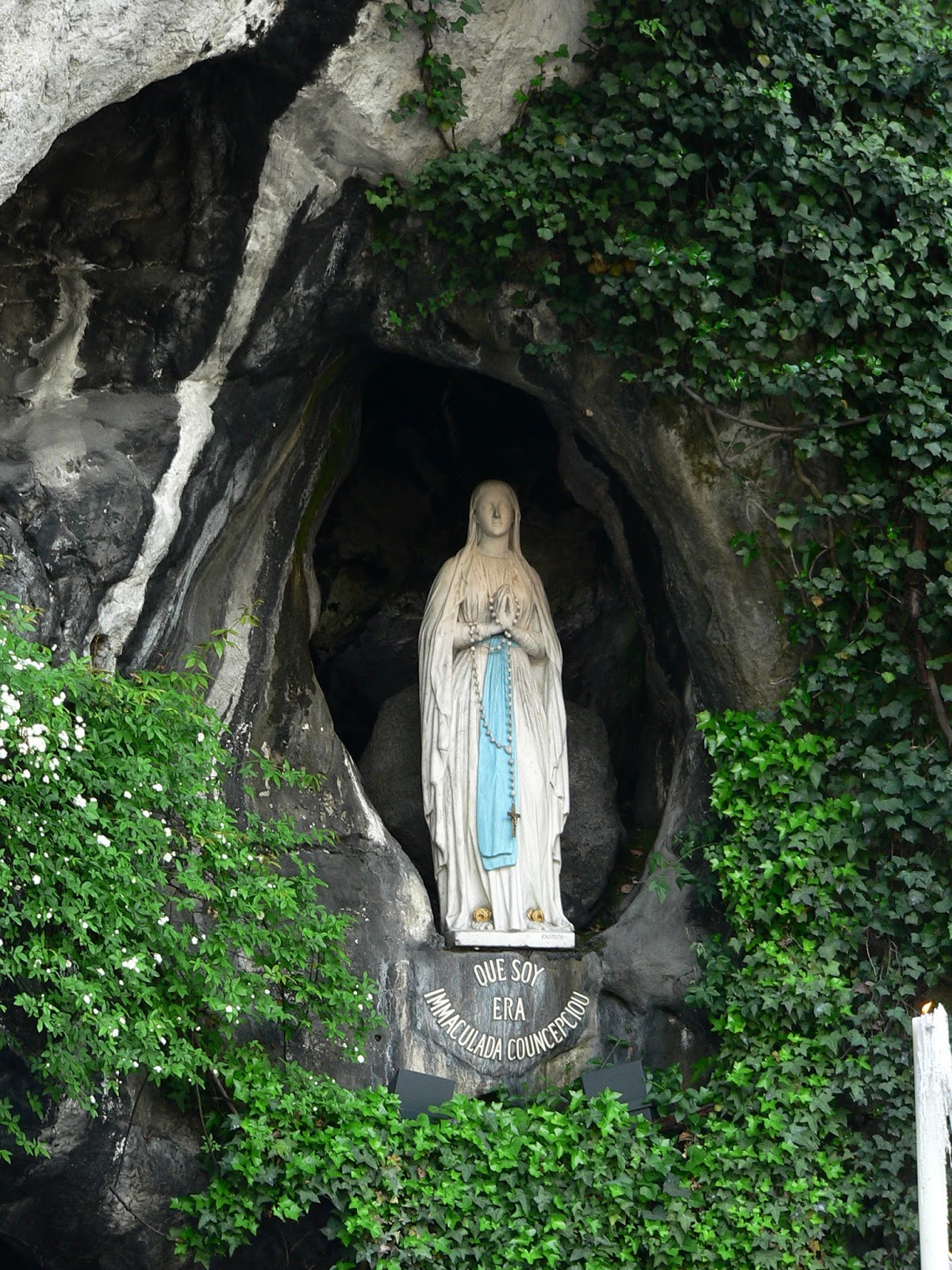
PROPER OF SAINTS - Te Dicimus Praeconio is sung at Matins on the Feast of Our Lady of Lourdes, February 11. Although the author of the original Latin hymn is unknown, some have suggested that Leo XIII (who contributed to the Office of Our Lady of Lourdes) may have written the text. The English translation is by Archbishop Edward Bagshawe (1829-1915). The other Latin hymns traditionally sung with the Office for Our Lady of Lourdes are: Ave Maris Stella (Vespers I), Aurora Soli Previa (Lauds), and Omnis Experts Maculae Mariam (Vespers II). O Virgin Mother of Our God can be sung to any hymn tune with 8.8.8.8metre such as the 7th century Latin hymn: Creator Alme Siderum, as featured in the following video.
TE DICIMUS PRAECONIO
1. Te dicimus praeconio,
Intacta Mater Numinis,
Nostris benigna laudibus
Tuam repende gratiam.
PROPER OF SAINTS - The Feast of Our Lady of the Rosary is celebrated every October 7, the anniversary of the 1571 Battle of Lepanto, which saw the Holy League, a coalition of European Catholic maritime states arranged by Pope Pius V win a pivotal and decisive navel victory over the Ottoman fleet. The victory is associated with Our Lady because Pius V had led a special Rosary procession through Rome and called on the all the faithful to pray the Rosary for victory. Originally called the Feast of Our Lady of Victory, the Feast Day was eventually extended to the General Roman Calendar in 1716.
The Rosary has a special relationship with the Liturgy of the Hours. Sometimes referred to as 'Our Lady’s Psalter', the 150 Hail Marys of the traditional 15 decade Rosary correspond to the 150 Psalms of the Psalter. Beginning in the late Middle Ages, the devotion was encouraged by the Church especially among the laity and illiterate as a means of uniting themselves in the daily prayer life of the Church.
Paragraph #971 of the Catechism of the Catholic Church explains why the Church honours the Blessed Virgin with such devotion: "This very special devotion differs essentially from the adoration which is given to the incarnate Word and equally to the Father and the Holy Spirit, and greatly fosters this adoration. The liturgical feasts dedicated to the Mother of God and Marian prayer, such as the rosary (an epitome of the whole Gospel), express this devotion to the Virgin Mary." John Paul II in his 2002 encylical Rosarium Virginis Mariae further expounds: "the Rosary, though clearly Marian in character, is at heart a Christocentric prayer". It is "a compendium of the Gospel" in which we are "praying to Christ with Mary".
PROPER OF SAINTS - The Gladness of Thy Motherhood is a translation by the Abbot of Fort Augustus Abbey, Scotland Oswald Hunter-Blair(1853-1939) of Te Gestientem Gaudiis by Fr. Augustine Thomas Ricchini, OP (1695-1779). In 1757, Fr. Ricchini composed this hymn along with 3 others for the Feast of the Most Holy Rosary. Originally included only in the Dominican Breviary, they were added to the Roman Breviary in 1888. The four hymns are essentially one work: the first 3 hymns are comprised of 5 stanzas each (plus doxology) which correspond to the 15 mysteries of the traditional Rosary. The final hymn: Te Gestientem Gaudiis (the only one in use today) is a recapitulation of the first three hymns. In the Roman Breviary it was traditionally sung at 2nd Vespers on the Feast of the Most Holy Rosary (Oct. 7). The Gladness of Thy Motherhood can be sung to any hymn tune with 8.8.8.8 metre such as the 7th century Latin hymn: Creator Alme Siderum, as featured in the following video.
Tune: Creator Alme Siderum
THE GLADNESS OF THE MOTHERHOOD by Oswald Hunter-Blair
1. The gladness of thy Motherhood,
The anguish of thy suffering,
The glory now that crowns thy brow,
O Virgin Mother, we would sing.
2. Hail, blessed Mother, full of joy
In thy consent, thy visit too;
Joy in the birth of Christ on earth,
Joy in Him lost and found anew.
3. Hail, sorrowing in His agony
The blows, the thorns that pierced His brow;
The heavy wood, the shameful Rood
Yea! Queen and chief of Martyrs thou.
4. Hail, in the triumph of thy Son,
The quickening flames of Pentecost;
Shining a Queen in light serene,
When all the world is tempest-tost.
5. O come, ye nations, roses bring,
culled from these mysteries divine,
and for the Mother of your King
with loving hands your chaplets twine.
6. All honor, laud, and glory be,
O Jesu, Virgin-born to Thee;
All glory, as is ever meet,
To Father and to Paraclete.
TE GESTIENTEM GAUDIIS by Augustine Thomas Ricchini
1. Te gestientem gaudiis,
Te sauciam doloribus,
Te iugi amictam gloria,
O Virgo Mater, pangimus.
2. Ave, redundans gaudio
Dum concipis, dum visitas;
Et edis, offers, invenis,
Mater beata, Filium.
3. Ave, dolens, et intimo
In corde agonem, verbera,
Spinas crucemque Filii
perpessa,
Princeps martyrum.
4. Ave, in triumphis Filii,
In ignibus Paracliti,
in regni honore et lumine,
Regina fulgens gloria.
5. Venite, gentes, carpite
Ex his rosas mysteriis,
Et pulchri amoris inclitae
Matri coronas nectite.
6. Iesu, tibi sit gloria,
Qui natus es de Virgine,
Cum Patre, et almo Spiritu,
In sempiterna saecula.
Painting by Luca Giordano (1634-1705) - Courtesy of Wikipedia
PROPER OF SAINTS - Now Hell is Vanquished is a translation by the Anglican Priest Winfred Douglas(1867-1944) of Iam Morte, Victor, Obruta by Fr. Augustine Thomas Ricchini, OP (1695-1779). In 1757, Fr. Ricchini composed this hymn along with 3 others for the Feast of the Most Holy Rosary. Originally included only in the Dominican Breviary, they were added to the Roman Breviary in 1888. The four hymns are essentially one work: the first 3 hymns are comprised of 5 stanzas each (plus doxology) which correspond to the 15 mysteries of the traditional Rosary. The final hymn: Te Gestientem Gaudiis (the only one in use today) is a recapitulation of the first three hymns. In the Roman Breviary, Iam Morte, Victor, Obruta (which has as it's theme: the Glorious Mysteries) was traditionally sung at Lauds on the Feast of the Most Holy Rosary (Oct. 7). Now Hell is Vanquished can be sung to any hymn tune with 8.8.8.8 metre such as the 7th century Latin hymn: Creator Alme Siderum, as featured in the following video.
Tune: Creator Alme Siderum
NOW HELL IS VANQUISHED by Winfred Douglas
1. Now Hell is vanquished; every chain
Of sin is broken; Christ again
Returning, victor over death,
The gates of heaven openeth.
2. We mortals saw Him, till He passed
Into the heavens, where at last,
Partaker of God's glory bright,
He sitteth on the Father's right.
3. From thence He sheds the promised boon,
The Holy Spirit, on His own
In fiery tongues of love, o'erspread
Above each sad disciple's head.
4. The Virgin, from the flesh set free,
Is borne beyond the stars; where she
Receives from heaven's joyous throngs
The welcome of angelic songs.
5. Twice six the stars that crown her brow;
The gracious Mother reigneth now
Beside her Son's eternal throne
O'er all creation as her own.
6. All honor, laud, and glory be,
O Jesu, Virgin-born to Thee;
All glory, as is ever meet,
To Father and to Paraclete.
IAM MORTE, VICTOR, OBRUTA by Augustine Thomas Ricchini
1. Iam morte, victor, obruta,
Ab inferis Christus redit,
Fractisque culpae vinculis,
Caeli recludit limina.
2. Visus satis mortalibus
Ascendit ad caelestia,
Dextraeque Patris assidet
Consors Paternae gloriae.
3. Quem iam suis promiserat,
Sanctum daturus Spiritum,
Linguis amoris igneis
Maestis alumnis impluit.
4. Soluta carnis pondere
Ad astra Virgo tollitur,
Excepta caeli iubilo,
Et Angelorum canticis.
5. Bis sena cingunt sidera
Almae parentis verticem:
Throno propinqua Filii
Cunctis creatis imperat.
6. Iesu, tibi sit gloria,
Qui natus es de Virgine,
Cum Patre, et almo Spiritu,
In sempiterna saecula.
Painting by Andrea Mantegna, 1460 - Courtesy of Wikipedia
PROPER OF SAINTS - The Mount of Olives Witnesseth is a translation by Fr. Hugh T. Henry (1862-1946) of In Monte Olivis Consito by Fr. Augustine Thomas Ricchini, OP (1695-1779). In 1757, Fr. Ricchini composed this hymn along with 3 others for the Feast of the Most Holy Rosary. Originally included only in the Dominican Breviary, they were added to the Roman Breviary in 1888. The four hymns are essentially one work: the first 3 hymns are comprised of 5 stanzas each (plus doxology) which correspond to the 15 mysteries of the traditional Rosary. The final hymn: Te Gestientem Gaudiis (the only one in use today) is a recapitulation of the first three hymns. In the Roman Breviary, In Monte Olivis Consito (which has as it's theme: the Sorrowful Mysteries) was traditionally sung at Matins on the Feast of the Most Holy Rosary (Oct. 7). The Mount of Olives Witnesseth can be sung to any hymn tune with 8.8.8.8 metre such as the 7th century Latin hymn: Creator Alme Siderum, as featured in the following video.
Tune: Creator Alme Siderum
THE MOUNT OF OLIVES WITNESSETH by Alan G. McDougal
1. The Mount of Olives witnesseth
The awful agony of God:
His soul is sorrowful to death,
His sweat of blood bedews the sod.
2. And now the traitor's work is done:
The clamorous crowds around Him surge;
Bound to pillar, God the Son
Quivers beneath the blood-red scourge.
3. Lo! clad in purple soiled and worn,
Meekly the Savior waiteth now
While wretches plait the cruel thorn
To crown with shame His royal brow.
4. Sweating and sighing, faint with loss
Of what hath flowed from life's red fount,
He bears the exceeding heavy Cross
Up the verge of Calvary's mount.
5. Nailed to the wood of ancient curse,
Between two thieves the Sinless One
Still praying for His murderers,
Breathes forth His soul, and all is done!
6. All honor, laud, and glory be,
O Jesu, Virgin-born to Thee;
All glory, as is ever meet,
To Father and to Paraclete.
IN MONTE OLIVIS CONSITO BY Augustine Thomas Ricchini
1. In monte olivis consito
Redemptor orans procidit,
Maeret, pavescit, deficit,
Sudore manans sanguinis.
2. A proditore traditus
Raptatur in poenas Deus,
Durisque vinctus nexibus,
Flagris cruentis caeditur.
Painting by Paolo de Matteis, 1721 - Courtesy of Wikipedia
PROPER OF SAINTS - The Messenger from God's High Throne is a translation by the Catholic convert, Alan G. McDougall (1895-1964) of Caelestis Aulae Nuntius by Fr. Augustine Thomas Ricchini, OP (1695-1779). In 1757, Fr. Ricchini composed this hymn along with 3 others for the Feast of the Most Holy Rosary. Originally included only in the Dominican Breviary, they were added to the Roman Breviary in 1888. The four hymns are essentially one work: the first 3 hymns are comprised of 5 stanzas each (plus doxology) which correspond to the 15 mysteries of the traditional Rosary. The final hymn: Te Gestientem Gaudiis (the only one in use today) is a recapitulation of the first three hymns. In the Roman Breviary, Caelestis Aulae Nuntius (which has as it's theme: the Joyful Mysteries) was traditionally sung at 1st Vespers on the Feast of the Most Holy Rosary (Oct. 7). The Messenger from God's High Throne can be sung to any hymn tune with 8.8.8.8 metre such as the 7th century Latin hymn: Creator Alme Siderum, as featured in the following video.
Tune: Creator Alme Siderum
THE MESSENGERS FROM GOD'S THRONE by Alan G. McDougall
1. The Messenger from God's high throne
His secret counsel making known
Hails Mary, child of David's race,
God's Virgin Mother, full of grace.
2. The Mother Maid with joyous feet
Her friend, John's mother, goes to greet;
He, stirring in the enclosing womb,
Declares that Christ his Lord has come.
3. The Word, who ere the worlds began,
From God the Father's thought forth ran,
Of Mary, Virgin undefiled,
For us is born a mortal child.
4. Christ to the Temple courts they bring;
The King's own law subjects the King;
The world's Redeemer for a price
is there redeemed, our sacrifice.
5. The joyful Mother finds once more
The Son she mourned as lost before;
While doctors by His speech were shown
The mysteries they had never known.
6. All honor laud, and glory be,
O Jesu, Virgin-born to Thee;
All glory, as is ever meet,
To Father and to Paraclete.
CAELESTIS AULAE NUNTIUS by Fr. Augustine Thomas Ricchini
1. Caelestis aulae Nuntius,
Arcana pandens Numinis,
Plenam salutat gratia
Dei Parentem Virginem.
2. Virgo propinquam sanguine
Matrem Ioannis visitat,
Qui, clausus alvo, gestiens
Adesse Christum nuntiat.
3. Verbum, quod ante saecula
E mente Patris prodiit,
E Matris alvo Virginis,
Mortalis Infans nascitur.
4. Templo puellus sistitur,
Legique paret Legifer,
Hic se Redemptor paupere
Pretio redemptus immolat.
5. Quem iam dolebat perditum,
Mox laeta Mater invenit
Ignota doctis mentibus
Edisserentem Filium.
6. Iesu, tibi sit gloria,
Qui natus es de Virgine,
Cum Patre, et almo Spiritu,
In sempiterna saecula.
1. Angel-Guardians of men, spirits and powers we sing,
Whom our Father hath sent, aids
to our weakly frame,
Heavenly friends and guides, help
from on high to bring,
Lest we fail through the foeman's
wile.
2. He, the spoiler of souls, Angel-traitor
of old,
Cast in merited wrath out of his
honored place,
Burns with envy and hate, seeking
their souls to gain
Whom God's mercy invites to
heaven.
3. Therefore come to our help,
watchful ward of our lives:
Turn aside from the land, God to
thy care confides
Sickness and woe of soul, yea, and
what else of ill
Peace of heart to its folk denies.
4. Now to the Holy Three praise
evermore resound:
Under whose hand divine resteth
the triple world
Governed in wondrous wise: glory
be theirs and might
While the ages unending run.
CUSTODES HOMINUM PSALLIMUS ANGELOS by Robert Bellarmine SJ.
1. Custodes Hominum Psallimus Angelos
naturae fragili quos Pater addidit
caelestis comites, insidiantibus
ne succumberet hostibus.
2. Nam, quod corruerit proditor angelus,
concessis merito pulsus honoribus,
ardens invidia, pellere nititur
quos caelo Deus advocat.
3. Huc, custos, igitur pervigil advola,
avertens patria de tibi credita
tam morbos animi, quam requiescere
quidquid non sinit incolas.
4. Sanctae sit Triadi laus pia iugiter,
cuius perpetuo numine machina
triplex haec regitur, cuius in omnia
regnat gloria saecula. Amen.
CHRIST, OF THE ANGELS PRAISE AND ADORATION by T.I. Ball
1. Christ, of the Angels praise and adoration,
Father and Saviour Thou, of every nation,
Graciously grant us all to gain a station,
Where Thou art reigning.
2. Angel all peaceful, to our dwellings send us,
Michael, from heaven coming to befriend us,
Breathing serenest peace may he attend us,
Grim war dispelling.
3. Angel of strength, who triumphed, tumults quelling,
Gabriel send us, ancient foes expelling,
Oft in these temples may he make
his dwelling,
Dear unto heaven.
4. Angel Physician, health on man
bestowing,
Raphael send us from the skies
all glowing,
All sickness curing, wisest counsel
showing
In doubt and danger.
5. May the fair Mother of the Light
be o'er us,
Virgin of peace, with all the Angel
chorus,
And may the heavenly army go
before us,
Guiding and guarding.
6. 0 May the Godhead, endless bliss
possessing,
Father, Son, Spirit, grant to us
this blessing;
All His creation joins His praise
confessing,
Now and forever.
Tune: Christe Sanctorum
CHRISTE, SANCTORUM attributed to Rabanus Maurus
1. Christe, sanctorum decus Angelorum,
Gentis humanae sator et redemptor,
Caelitum nobis tribuas beatas
Scandere sedes.
2. Angelus pacis Michael in aedes
Coelitus nostras veniat, serenae
Auctor ut pacis lacrimosa in orcum
Bella releget.
3. Angelus fortis Gabriel, ut hostes
Pellat antiquos, et arnica ccelo,
Quse triumphator statuit per
orbem,
Temp la revisat.
4. Angelus nostrae medicus salutis,
Adsit e coelo Raphael, ut omnes
Sanet aegrotos, dubiosque vitae
Dirigat actus.
5. Virgo dux pacis, Genitrixque lucis,
Et sacer nobis chorus Angelorum
Semper assistat, simul et
micantis
Regia coeli.
6. Praestet hoc nobis Deitas beata
Patris, ac Nati, pariterque sancti
Spiritus, cujus resonat per
omnem
Gloria mundum.